Holding on to Home: Why Professional Support is the Key to Staying Independent
![[HERO] Holding on to Home: Why Professional Support is the Key to Staying Independent](https://cdn.marblism.com/_Q8pA_uYBMu.webp)
It usually happens in the quiet hours, doesn't it? You’re sitting in the glow of your laptop screen at two in the morning, the rest of the house asleep, while you type words like elder care services or senior independence into a search bar. There is a specific kind of weight that settles in your chest during those midnight research sessions. It’s a mix of love, exhaustion, and a nagging sense of guilt that you can’t quite shake.
You’ve noticed the small things lately. Maybe it’s the way your mom paused a little too long at the top of the stairs, or how the mail has started to pile up on the entryway table. Perhaps it was the slight tremor in your dad’s hand as he reached for his coffee mug. You want them to be safe, but more than anything, you want them to be happy. And you know, deep down, that their happiness is tied directly to that house: the one with the creaky third step and the kitchen window that catches the morning sun just right.
For many of us, the idea of bringing in help feels like a surrender. We worry that by hiring a home health aide, we are officially "signing over" our parents’ freedom. We fear that the minute a stranger walks through that front door, the version of Mom or Dad that we know: the independent, capable, fiercely proud version: will start to fade away. We worry we are taking something from them.
But I want to offer you a different perspective, one I’ve seen play out in countless homes across Roanoke and Lynchburg. What if professional support isn't the end of independence? What if it is actually the very tool that preserves it? At Karis Cares, we’ve found that the right kind of help doesn't replace a person's autonomy. It acts as the scaffolding that keeps that autonomy standing tall when the winds of aging start to blow. That is the heart of compassionate home care in Roanoke and Lynchburg, and it’s why so many families begin by exploring flexible home care support services that fit around the life their loved one already knows and loves.

The Great Misunderstanding of Independence
I think this is where so many families get tangled up.
We tend to think of independence as a solo act. We grew up believing that being "independent" means doing every single thing for yourself, from scrubbing the floors to managing a complex list of medications. No help. No interruptions. No assistance. Just grit.
But life has a way of softening those sharp definitions.
As we get older, the meaning of independence has to mature too. True independence isn't about the ability to do everything alone. It’s about having the power to make your own choices and live life on your own terms. It’s about being able to stay in your own home. Sit in your own chair. Drink coffee from your favorite mug. Decide when to wake up, what to wear, and whether the curtains stay open to let in the morning light.
That matters.
It matters more than people realize.
Think about it this way. If your car breaks down, you don't lose your independence as a driver just because you take it to a mechanic. You’re simply getting the support you need to stay on the road. Home care is very much the same. It is the tune-up that keeps the engine running so your loved one can keep choosing where they want to go and how they want to get there.
And sometimes the biggest threat to independence isn’t help.
It’s fear.
When a senior begins to struggle with daily tasks, they often start to shrink their world. They stop cooking because the stove feels dangerous. They stop going for walks because they’re afraid of a fall. They stop inviting friends over because they can’t keep up with the cleaning. They stop reaching for the cereal on the top shelf. Stop carrying laundry down the hall. Stop stepping outside after a rainy morning because the porch feels slick.
This isn't independence.
This is a slow, forced retreat.
That’s one reason I encourage families to learn from trusted outside resources too. The CDC’s STEADI initiative offers practical guidance on reducing fall risk and helping older adults stay safer at home without giving up the routines they love. You can explore that resource here: CDC STEADI fall prevention resources. I also often think about how much the home itself shapes confidence. A doorway that is too narrow, a rug that curls at the edge, a bathroom that needs one sturdy grab bar can quietly chip away at a person’s sense of security. That’s why resources like AARP HomeFit, National Institute on Aging's tips for growing older at home, and Johns Hopkins Medicine's home safety resources are so helpful. They remind us that sometimes preserving independence starts with small changes in familiar rooms.
By introducing elder care services, we stop that retreat in its tracks. We provide the steady hand that allows them to keep the stove on, keep the walking shoes laced up, and keep the door open for visitors.
And I can’t say this strongly enough: support does not erase independence. It protects it.
A Dignity-First Approach to the Daily Routine
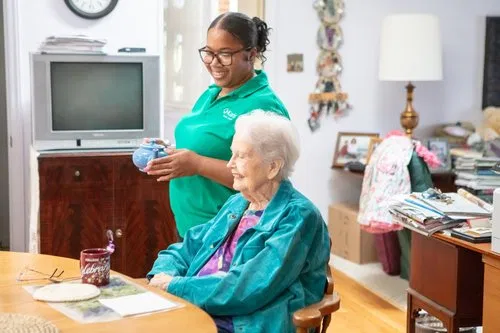
When I talk about home care Roanoke VA families can trust, I am not talking about someone coming in and taking over. I am talking about a partnership. A relationship. A steady presence. A great caregiver knows how to lead from behind. They understand that there is a world of difference between "doing for" and "doing with." This is what we call a dignity-first approach, and it’s at the heart of everything we do. For some families, that partnership may include help with meals and bathing. For others, it may include transportation for appointments and errands or more specialized support through dementia and chronic condition care.
That phrase, dignity-first, is not just something that sounds nice on a page.
It changes the feel of a home.
It changes the tone of the morning.
It changes the look in someone’s eyes.
Imagine a typical Tuesday morning. A home health aide arrives and finds your mother in the kitchen. Instead of simply making breakfast and putting it in front of her, the caregiver asks, "How do you like your eggs today, Margaret? Shall we use the blue plates or the yellow ones?" It seems like a small thing, but those tiny choices are the building blocks of a person's sense of self.
I have learned over the years that life is made up of these little moments. Not grand speeches. Not dramatic turning points. Little moments. The kind that happen beside the toaster. In the hallway mirror. At the bathroom sink. In the pause before putting on a sweater.
Dignity is found in the details. It’s in the way a caregiver helps with a bath: ensuring privacy, using the preferred scented soap, and never rushing the process. It’s in the way they help with dressing, offering two outfits to choose from rather than just picking one out of the closet. It’s in asking before moving a favorite chair. In noticing how someone likes their hair combed. In remembering that they take their tea weak, with extra milk, in the chipped floral cup they’ve used for years.
Those things are not trivial.
They are personal.
They say, I still see you. I still honor you. This is still your life.
Our goal is to ensure that the client is always the captain of the ship, even if they need a little help navigating the choppy waters.
And honestly, that is when care feels most beautiful to me.
Not when everything is perfect.
But when someone feels respected.
https://cdn.marblism.com/qlRIP8q7CnC.webp
Challenging the Myth of "Losing Control"
If I could gently lift one fear off the shoulders of older adults and their families, it would be this one.
The fear of losing control.
The biggest fear seniors have is that they will be "put away" or lose their voice in their own care. This fear is often what leads to them hiding their struggles from their adult children. They don't want to admit they're struggling because they think the only alternative is a sterile facility where they follow a rigid schedule set by someone else.
And I understand that fear.
I really do.
Because once someone has spent decades building a life, raising a family, paying bills, tending gardens, showing up for church, helping neighbors, and making a home feel like home, the idea of suddenly being managed can feel unbearable. It can feel like being erased one decision at a time.
We have to challenge that myth head-on. Professional home care is the ultimate "anti-facility" solution. It is designed to keep the schedule exactly the way the senior wants it. If Dad wants to stay up late watching old Westerns and sleep in until ten, he can. If Mom wants to spend three hours in the garden but needs someone nearby just in case she loses her balance, she can. And when memory changes begin to shape daily life, families do not have to figure it out alone. Resources like NIA's guide on getting help for Alzheimer’s caregiving can be a steady, reassuring starting point.
That’s the heart of it.
They can.
They still can.
Needing help with a zipper or a meal doesn't mean you’ve lost control of your life. It means you’re smart enough to accept the support that allows you to keep the parts of your life that matter most. We often see that once a senior realizes they are still the boss, their anxiety melts away. They stop being defensive and start being engaged again.
There is often a visible shift.
The shoulders drop.
The voice softens.
The resistance eases.
Because what they discover is this: being supported is not the same thing as being sidelined.
That truth can change the whole atmosphere of a home.
When Confidence Returns
This is often the moment families don't expect.
And to be honest, it is one of my favorite parts of this work.
A senior who has quietly given up a favorite hobby begins to feel like themselves again.
Not because someone took over. But because someone came alongside them.
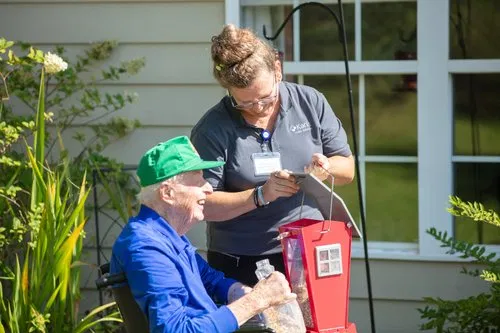
Sometimes it looks like gardening. A caregiver stays nearby while a client waters flower pots, carries the heavier tools, or offers a steady arm while walking out to the porch. Sometimes it looks like walking the neighborhood again, with someone there for balance, encouragement, and peace of mind. Sometimes it looks like being able to bake a familiar recipe because someone else can lift the heavy pot. Sometimes it is as simple as sitting on the front porch again, watching the birds and waving at neighbors without the constant undercurrent of worry.
The activity may seem simple from the outside, but to the person living it, it represents identity, joy, and normal life.
This is why home safety matters so much too. Confidence rarely returns in a vacuum. It grows when the environment feels manageable. It grows when pathways are clear, lighting is better, and hazards are addressed before they become emergencies. Practical tools like the CDC’s STEADI program and the AARP HomeFit guide can give families a place to start, especially when they are trying to think through fall prevention and simple home adjustments with fresh eyes. Sometimes the answer is not a dramatic overhaul. Sometimes it is better lighting by the back steps. A rail where there wasn’t one before. A bathroom arranged with more intention. Small changes. Big relief.
That is where professional care can be so powerful. The goal is not just to keep someone safe inside four walls. The goal is to create a safety net that makes life feel open again. A little support with mobility. A little help managing fatigue. A watchful presence close by. Often, that is all it takes for confidence to return.
And when confidence returns, so does something deeper.
There is purpose again. Fresh air. Routine. Something to look forward to.
There is laughter again. Conversation. A reason to get dressed before lunch. A reason to open the blinds. A reason to say yes when someone asks, "Would you like to go outside for a bit?"
By accepting a little help, many seniors are able to reclaim the parts of daily life that make them feel most like themselves. That is the true power of senior independence.
It is not smaller than before.
If anything, it becomes more precious.
https://cdn.marblism.com/uL8VAPSaWp0.webp
Giving the Adult Child Their Role Back
There is another person who benefits immensely from this shift in perspective: you. And I want to pause there, because family caregivers carry so much that often goes unseen.
When you are the sole provider of care, your relationship with your parent inevitably changes. You become the "policeman." You’re the one checking the fridge for expired milk, the one hovering during every walk, the one nagging about medication.
You become the reminder. The scheduler. The worrier. The one holding ten moving pieces in your head while trying to sound calm on the phone.
That kind of love is real.
But it is also exhausting.
It is very hard to be a loving daughter or son when you are also a full-time nurse, housecleaner, and administrator. By bringing in professional elder care services, you get to step out of the "policing" role and back into your rightful place. You can visit Mom just to have tea and hear her stories. You can take Dad to the movies without worrying about his blood pressure or his laundry.
You can be present again.
Not just responsible. Present.
When the logistics of daily life are handled by a professional, the emotional space in your family reopens. You can breathe again. You can sleep through the night knowing that an RN-supervised team is keeping a watchful eye on the details you used to worry about alone.
And that relief matters too. We feel quietly proud of the trust families place in us, and deeply grateful to the community that recently recognized our team with Lynchburg’s best at-home care award.
Families need support. Not judgment. Not pressure. Support.
I have sat with enough families around enough kitchen tables to know this is often the moment tears come. Not because someone is failing. But because someone finally realizes they do not have to carry it all by themselves anymore.
A Steady First Step Toward Peace of Mind
If you’re still feeling that tug of guilt, I want to say this as plainly and warmly as I can: let it go. Asking for help isn't a sign that you’ve failed your parent; it’s a sign that you love them enough to ensure they have the best possible quality of life. It’s an investment in their dignity and your shared peace of mind.
And sometimes peace of mind begins with one honest conversation.
Not a five-year plan. Not a crisis. Just one conversation.
Independence isn't a destination you arrive at and then leave; it’s a journey that changes as we go. Sometimes, staying independent means admitting that we need a partner for the walk. Sometimes it means rearranging the furniture. Sometimes it means adding support before fear starts making the decisions. Whether you are looking for a few hours of companionship or more intensive home health aide support, the goal remains the same: keeping the heart of the home beating right where it belongs.
That is what I want families to hear most clearly.
Home care, when done well, does not push life inward.
It opens life back up.
It preserves the familiar rhythm of home. The sound of the coffee maker. The dog at the back door. The church bulletin on the counter. The neighbor who still waves from across the street. The little ordinary things that do not look remarkable from the outside, but mean everything to the person living among them.
We are here to walk alongside you, offering the professional oversight and the neighborly warmth that makes all the difference. You don't have to navigate these midnight searches alone anymore. There is a way to keep Mom and Dad safe, happy, and: most importantly: exactly where they want to be.
If it helps, start small. Read through trusted resources like CDC STEADI for fall prevention ideas, AARP HomeFit for making a home easier and safer to navigate, National Institute on Aging's tips for growing older at home for aging in place guidance, and Johns Hopkins Medicine's home safety resources for practical caregiving insight. Then, if and when you’re ready, have the conversation with someone who will meet you with compassion.
We invite you to reach out whenever you're ready to talk about how we can support your family's journey toward lasting independence.
A gentle invitation. A steady first step. That’s all it has to be.